Sugoroku
Japanese board game with two variants, one still popular today.

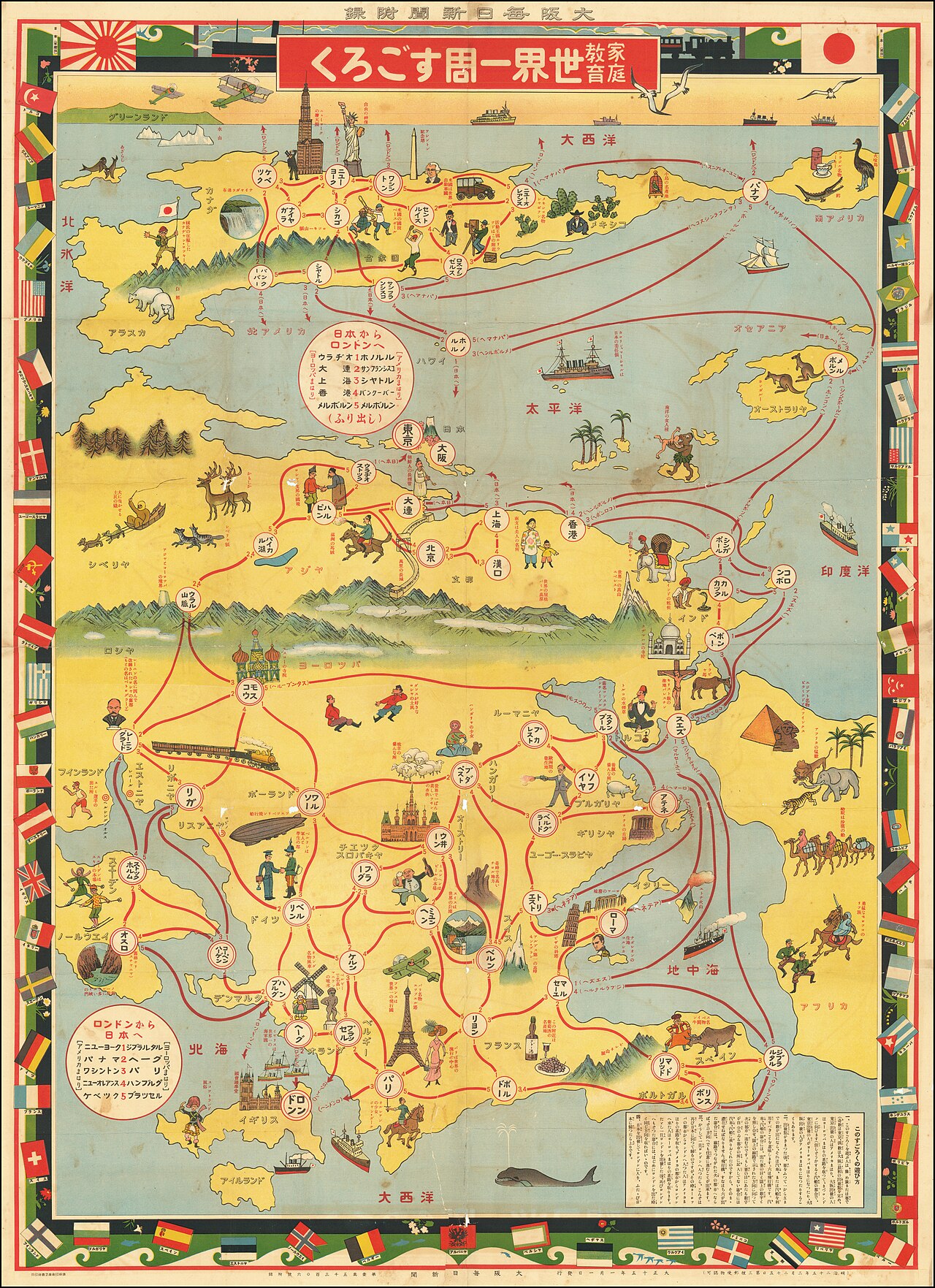
Unknown author Unknown author Osaka Mainichi Shinbun · Public domain
Sugoroku (雙六 or 双六) refers to two distinct forms of a Japanese board game: e-sugoroku (picture-sugoroku), similar to Western snakes and ladders, and ban-sugoroku (board-sugoroku), similar to Western tables games like backgammon. Today, with ban-sugoroku obsolete, the term almost always denotes e-sugoroku, which remains popular through modern printing methods and video games.
- type
- Board game
- origin
- Japan (ban-sugoroku introduced from China in the 6th century; e-sugoroku appeared by late 13th century)
- variants
- E-sugoroku and ban-sugoroku
- peak_period
- Edo period (for e-sugoroku)
- modern_status
- E-sugoroku popular in magazines and video games; ban-sugoroku extinct
Lore & Background
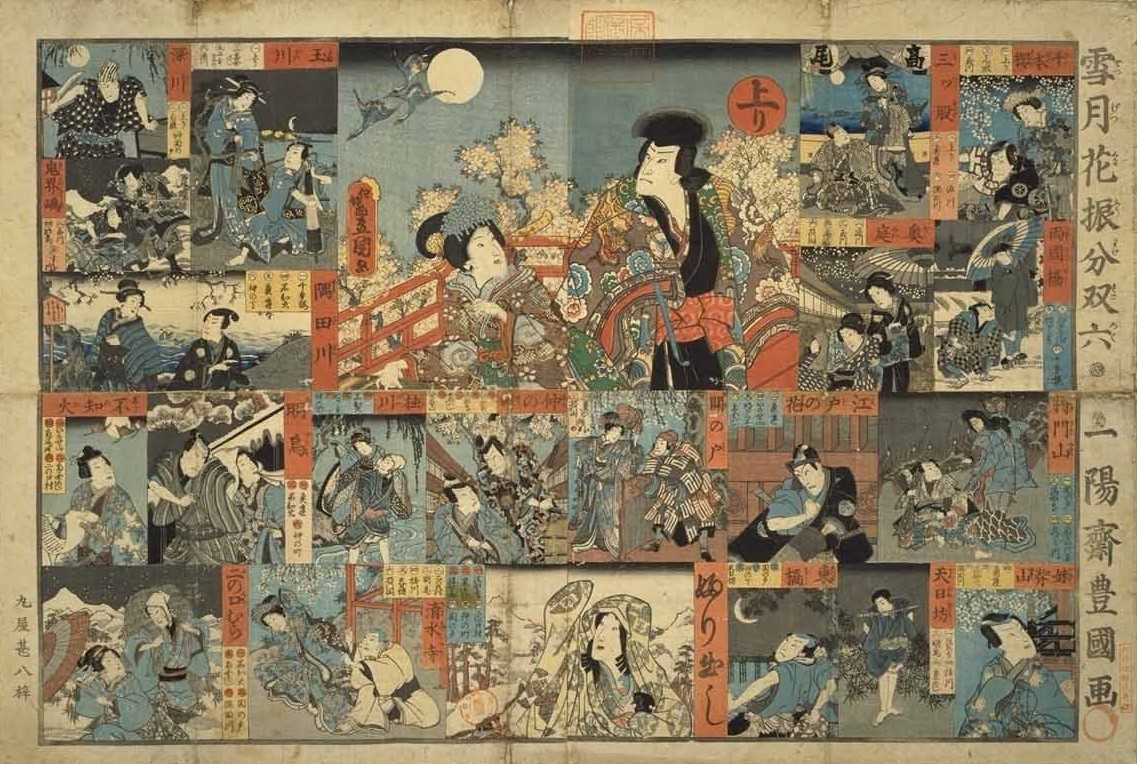
E-sugoroku, with rules akin to snakes and ladders, appeared as early as the late 13th century. It gained popularity during the Edo period due to elaborate wooden block printing technology and illustrations by well-known artists. Thousands of board variations were produced, covering themes from religion, politics, actors, and adult material. In the Meiji and later periods, e-sugoroku remained common in child-oriented magazines. Topics included visiting famous places, people, and social customs, reflecting the Edo fascination with the imperial capital of Kyoto. Tokaido e-sugoroku games typically start at Nihonbashi in Edo and end in Kyoto. Another theme was intelligent and virtuous women, depicted with images of feminine virtues. Ban-sugoroku, meanwhile, was subject to gambling-related restrictions as early as the Nara period (8th century), though precise dates for such bans are not widely attested in historical records.
Reader's Guide
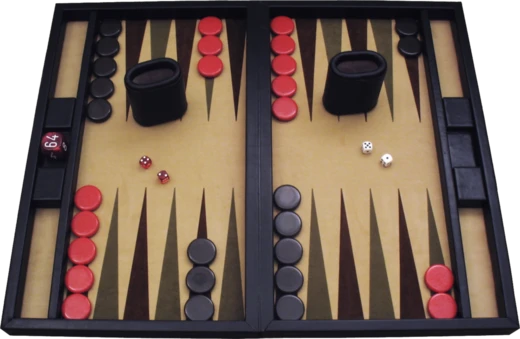
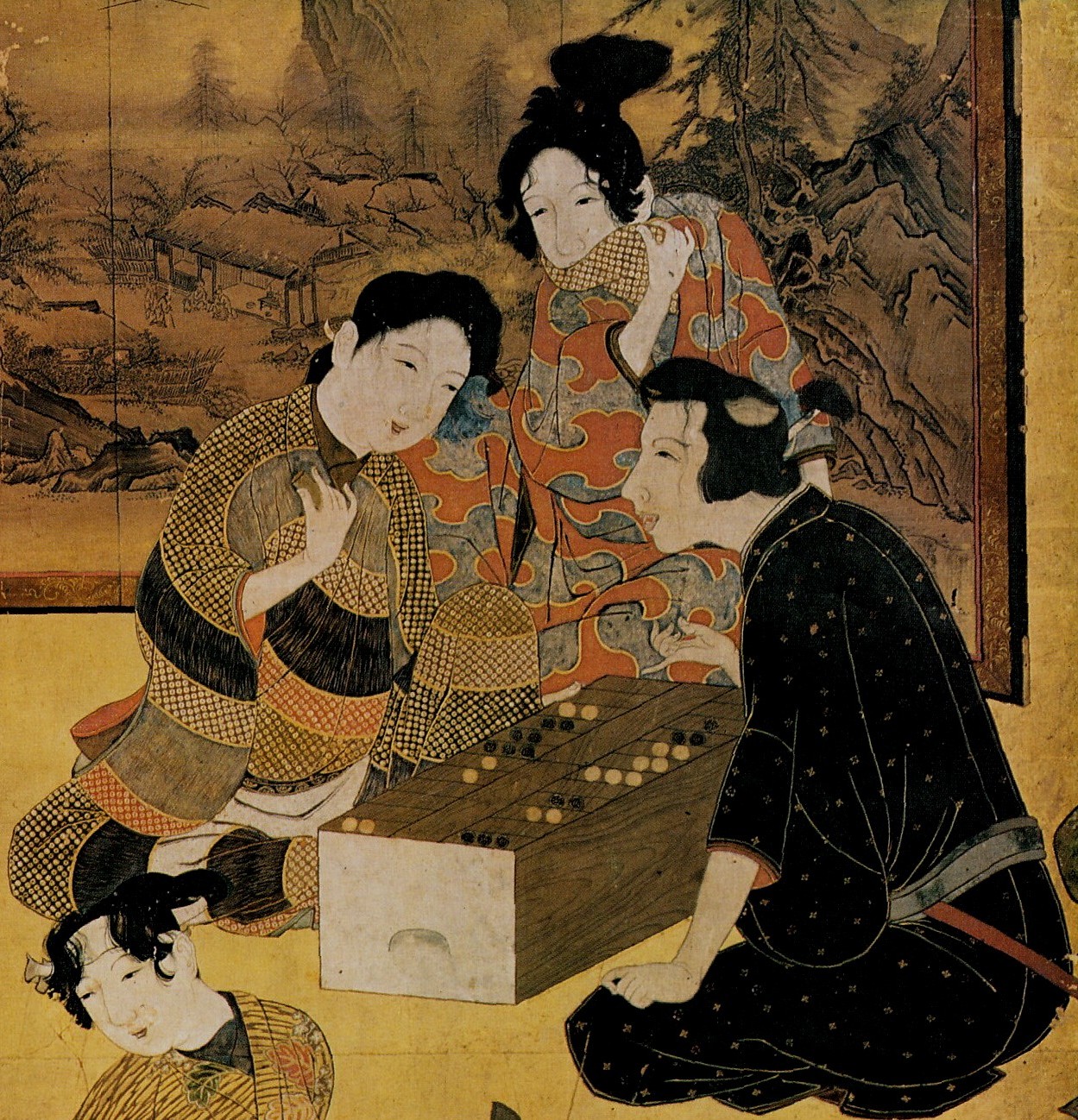
Ban-sugoroku, played similarly to Western tables games, shares the same starting position as backgammon but differs in rules: doubles are not special, there is no bearing off (the goal is to move all men within the last six spaces), no doubling cube, and closing out (forming a prime of six contiguous points with an opponent's men on the bar) is an automatic win. Introduced from China in the 6th century, it was banned multiple times (notably in 689 and 754) due to its use in gambling. Its popularity waned in the early Edo era with the rise of the quicker gambling game Chō-han. Ban-sugoroku has since died out in Japan and most other countries, while Western backgammon persists. E-sugoroku, however, has endured and inspired numerous video games, including the Mario Party series (heavily influenced), Momotaro Dentetsu, and minigames in Dragon Quest and Samurai Warriors 2. The Tsukiji Sugoroku Museum in Tokyo holds 500 types of sugoroku from the Edo period to the 1950s.
Did You Know?
- Ban-sugoroku faced gambling-related restrictions as early as the Nara period (8th century), though specific years like 689 and 754 are not widely attested in historical records.
- E-sugoroku boards from the Edo period included themes such as religion, politics, actors, and adult material.
- The Mario Party series shows heavy influences from e-sugoroku.
Ancient Roots and the Gambling Controversy
Ban-sugoroku traces its lineage through a chain of cultural transmission stretching from Persia to China and finally to Japan. The Persian game Nard, widely regarded as an ancestor or early form of backgammon, gave rise to the Chinese Shuanglu, which was carried into Japanese shores around the sixth century. Once established, the game's straightforward, luck-driven mechanics made it a natural vehicle for wagering, and Japanese authorities responded with repeated legislative bans—most prominently in the years 689 and 754. Despite these prohibitions, records of sugoroku being played for stakes persisted well into the early Edo era. The gambling culture that surrounded ban-sugoroku eventually gave way to a newer, faster dice game called Chō-han, which siphoned off the betting crowd and accelerated the variant's long decline. Today, ban-sugoroku has effectively vanished from Japan and most other countries, while the Western-style modern backgammon, complete with its doubling cube, still commands a devoted following of players.
Edo-Era Illustration and the Tokaido Imagination
E-sugoroku, the picture-based variant with rules echoing snakes and ladders, emerged as early as the late thirteenth century but truly flourished during the Edo period. The era's sophisticated wooden block printing technology allowed well-known illustrators to produce thousands of distinct boards, each themed around subjects ranging from religion and politics to kabuki actors and even adult content. One of the most beloved motifs was the Tokaido route: the board's starting line sat at Nihonbashi in Edo, and players journeyed westward toward a finish in Kyoto, reflecting the common folk's romantic fascination with the distant imperial capital and its vicinity. Another popular theme celebrated intelligent and virtuous women through imagery of feminine ideals. Well into the Meiji period and beyond, e-sugoroku remained a staple of child-oriented magazines, and its continued presence in modern boys', girls', and women's publications keeps the tradition alive for new generations.
Sugoroku in Modern Video Games and Pop Culture
The sugoroku board has become a remarkably versatile template in Japanese video game design. Hudson Soft's Momotaro Dentetsu series draws directly from the genre, while the Mario Party franchise carries heavy e-sugoroku DNA in its track-based mini-game structure. Dragon Quest titles include a minigame—localized as "Treasures n' Trapdoors" or "Pachisi"—where players roll a six-sided die and advance along a board of spaces. Samurai Warriors 2 offers a sugoroku mini-game that pivots toward Monopoly-style territory purchasing across regions of Japan, complete with "Shrine" spaces analogous to Chance cards. Eternal Melody structures its dungeon exploration as a sugoroku board, and the survival horror title Kuon unlocks a ban-sugoroku minigame. Other entries span Hello Kitty, Yu-Gi-Oh!, Ganbare Goemon, and Hidamari Sketch, demonstrating the format's broad appeal across genres and audiences.
Ban-Sugoroku's Distinct Rules and Museum Preservation
Although ban-sugoroku shares backgammon's starting arrangement, its rule set diverges in several telling ways. Rolling doubles carries no special bonus—each die simply counts once. There is no bearing-off phase; instead, the objective is to bring every piece into the final six spaces of the board. A doubling cube does not exist in this variant. The most dramatic rule is "closing out": if a player forms a prime of six contiguous points while one or more of the opponent's men remain on the bar, the game ends immediately in that player's favor. This variant, born from the Chinese Shuanglu and ultimately the Persian Nard, has now died out in Japan and most other nations. The Tsukiji Sugoroku Museum in Tokyo preserves the broader sugoroku tradition with a collection spanning five hundred board types from the Edo period through the 1950s, ensuring that both the picture-rich e-sugoroku and the now-extinct ban-sugoroku remain accessible to researchers and enthusiasts alike.
Gallery
Frequently Asked Questions
What is Sugoroku?
Sugoroku is a Japanese board game that exists in two distinct forms: e-sugoroku, a picture-based race game resembling Western snakes-and-ladders, and ban-sugoroku, a strategic board game closer in structure to backgammon and other tables games.
How does Sugoroku connect to backgammon?
The ban-sugoroku variant is the one fans link to backgammon, as it is a dice-driven board game with pieces moved around a track, sharing the general family of Western tables games. That particular form, however, is now considered extinct, so the connection is historical rather than a living tradition.
What's the difference between e-sugoroku and ban-sugoroku?
E-sugoroku is essentially a luck-based picture race where players advance along an illustrated board, while ban-sugoroku is a more strategic, backgammon-like game involving dice rolls and piece movement on a structured board. Today the word 'Sugoroku' almost always refers to the e-sugoroku form because ban-sugoroku fell out of use centuries ago.
Is Sugoroku still played today?
Ban-sugoroku is effectively extinct, but e-sugoroku continues to appear in modern Japanese magazines and has been adapted into various video games. Its longevity comes largely from modern printing and digital media keeping the picture-race format accessible to new players.
Where did Sugoroku originate?
Ban-sugoroku was brought into Japan from China around the sixth century, while e-sugoroku emerged domestically by the late thirteenth century. The e-sugoroku variant reached its cultural peak during the Edo period and has persisted in one form or another ever since.
More in Backgammon 1-18
Spotted an error? Know more?
This is a living reference — every entry is fact-audited, and reader corrections feed straight into our audit queue. Suggest an edit · See this site's audit record