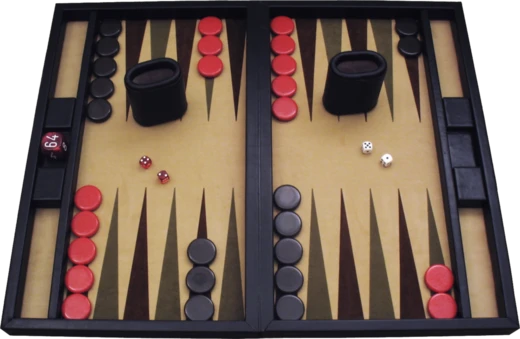
Calcutta auction
Open auction where participants bid to buy contestants in a tournament.

See description · Public domain
A Calcutta auction is a type of open, sequential auction linked to events with many participants, such as golf tournaments, horse races, or the NCAA basketball tournament during March Madness. It is also common in backgammon and the Melbourne Cup. Bidding proceeds in a random order, with participants wagering on one contestant at a time; each contestant is sold to the highest bidder. The buyer then receives a share of the total pool, based on a predetermined percentage tied to the contestant's performance in the event. While payoff structures vary—for example, in a 64-team single-elimination NCAA tournament with a maximum of six wins, specific payouts are set—the core rules differ by location. A key element is setting an appropriate wager for each contestant, since the final payout depends on the total pot and the size of the bids. This system resembles parimutuel betting because winnings come from the collective pool, but it differs in that only one person can bet on any given contestant. The exact origins of the technique are unclear, though it is widely associated with the city of Calcutta (now Kolkata), India.
- type
- Auction format
- origin
- Calcutta, India (associated)
- first_recorded_by
- Unknown
- associated_events
- Golf tournaments, horse races, backgammon, Melbourne Cup, NCAA March Madness
- key_feature
- Sequential auction with bidding on one contestant at a time in random order
Lore & Background
In a Calcutta auction, bidding for each contestant begins in random order, with bids placed on only one contestant at any time. Participants bid among themselves to 'buy' each contestant, with each contestant assigned to the highest bidder. The contestant then pays the owner a predetermined proportion of the pool depending on performance. Variations in payoff schedules exist; for example, in the NCAA basketball tournament (64 teams, single elimination, maximum six wins) payoffs could follow a specific schedule.
Reader's Guide
Calcutta auctions are significant as a historical betting mechanism that combines elements of auction and parimutuel wagering. They are similar to parimutuel betting in that winnings come from the total pool of bets, but differ in that only one player can bet on any one contestant. An important component is determining an appropriate wager for each contestant, as the payoff directly hinges on the size of the pot and bids. The format gained cultural visibility through its use as a major plot point in the 1967 film Banning, which features a Calcutta golf tournament. The precise rules vary from place to place, reflecting local adaptations.
Did You Know?
- The technique is widely associated with the city of Calcutta (now Kolkata), India, though its exact origins are not definitively recorded.
- A Calcutta auction is a sequential auction where bidding for each contestant begins in random order.
- Only one player can bet on any one contestant, unlike parimutuel betting.
- Contrary to some claims, a Calcutta golf tournament is not a major plot point of the 1967 film *Banning*.
Origins and the Sequential Bidding Process
The technique that gives the Calcutta auction its name was first documented by colonial British observers in Calcutta, India, where participants would gather to place competing bids on individual contestants. The core mechanic is a sequential auction: rather than allowing all bidders to simultaneously place wagers on every entrant, the process moves one contestant at a time in a randomized order. At any given moment, attention is fixed on a single participant, and only that participant is open for bidding. The highest bidder "buys" that contestant and becomes its owner for the duration of the event. This one-at-a-time structure creates a distinctive rhythm to the auction, as each round of bidding concludes before the next contestant is introduced. The method has since spread well beyond its Indian origins, finding enthusiastic communities in backgammon circles, horse-racing events like the Melbourne Cup, and the electric atmosphere of March Madness college basketball pools.
The Payoff Architecture
A defining feature of the Calcutta auction is how winnings flow back to the owner. Once a contestant is purchased at auction, that contestant will pay the owner a predetermined proportion of the total pool, with the exact share determined by how the contestant performs in the tournament. In the NCAA basketball tournament context—64 teams, single elimination, a maximum of six wins—payoff schedules can vary, but the principle remains: deeper runs generate larger returns to the owner. A critical component of any Calcutta is determining an appropriate wager for each contestant, because the payoff is directly tied to the size of the pot, which in turn is shaped by the size of the bids. This interdependence means that the auction itself is not merely a fun ritual but a genuine economic mechanism: every dollar bid inflates the pool, and every pool dollar ultimately flows back through the performance-based payout structure.
How It Differs from Standard Betting
While a Calcutta auction shares a surface resemblance with parimutuel betting—both distribute winnings from a collective pool of wagers—the structural difference is significant. In parimutuel systems, any number of bettors can place stakes on the same contestant, and payouts are calculated from the total pool. In a Calcutta, however, only one player can hold a position on any given contestant. Once the highest bidder secures a contestant, that slot is closed to all others. This exclusivity transforms the dynamics of the auction: bidders are not merely wagering on an outcome but competing directly against one another for ownership of a specific entrant. The result is a more personal, competitive experience where the auction itself becomes a contest of strategy and nerve, not just a passive bet on a result.
Cultural Footprint and Rule Variability
Though the basic framework of a Calcutta auction is consistent, the precise rules can shift from one venue or community to another, giving the format a flexible, locally adapted character. This adaptability has helped the auction travel across diverse sporting and recreational contexts—from golf tournaments to backgammon matches to the high-stakes energy of college basketball pools. The format has even crossed into popular culture: a Calcutta golf tournament serves as a major plot point in the 1967 film Banning, embedding the auction's competitive bidding drama into a narrative setting. The fact that a colonial-era practice recorded in India could evolve into a staple of American college sports and Hollywood screenwriting speaks to the universal appeal of the format: a small group of people, a set of contestants, and the thrill of outbidding your friends to claim a share of the prize.
Gallery


Frequently Asked Questions
What is a Calcutta auction in backgammon?
It is an open bidding format in which players at a tournament or match purchase 'shares' in individual opponents before any games are played. Each participant is put up for sale one at a time, and the highest bidder claims that player's portion of the prize pool.
How does the bidding order work in a Calcutta auction?
The sequence in which players are offered is randomized so nobody can strategically wait for a particular opponent. Bidding on each player continues until no one raises further, at which point that player is locked in for the top bidder.
How is the payout calculated if the player I bought wins?
Each finishing position is assigned a fixed percentage of the total pool before the auction begins, and the buyer collects the slice corresponding to that player's final standing. If you bought the champion you receive the champion's cut; a lower finisher yields a smaller share.
Where does the name 'Calcutta' come from?
The format is traditionally traced to Calcutta (now Kolkata), India, though no definitive first record of the practice has been established. The label stuck and the structure spread to other events, including backgammon, golf, and the Melbourne Cup.
Why is the Calcutta auction especially popular in backgammon?
Backgammon gatherings typically involve a small enough field that auctioning each player individually is practical and quick. It also layers a speculative, social element onto the evening—bidding against a strong rival or backing an underdog keeps the room engaged between games.
More in Backgammon 1-18
Spotted an error? Know more?
This is a living reference — every entry is fact-audited, and reader corrections feed straight into our audit queue. Suggest an edit · See this site's audit record